solo backpacking as a middle-aged woman – the how
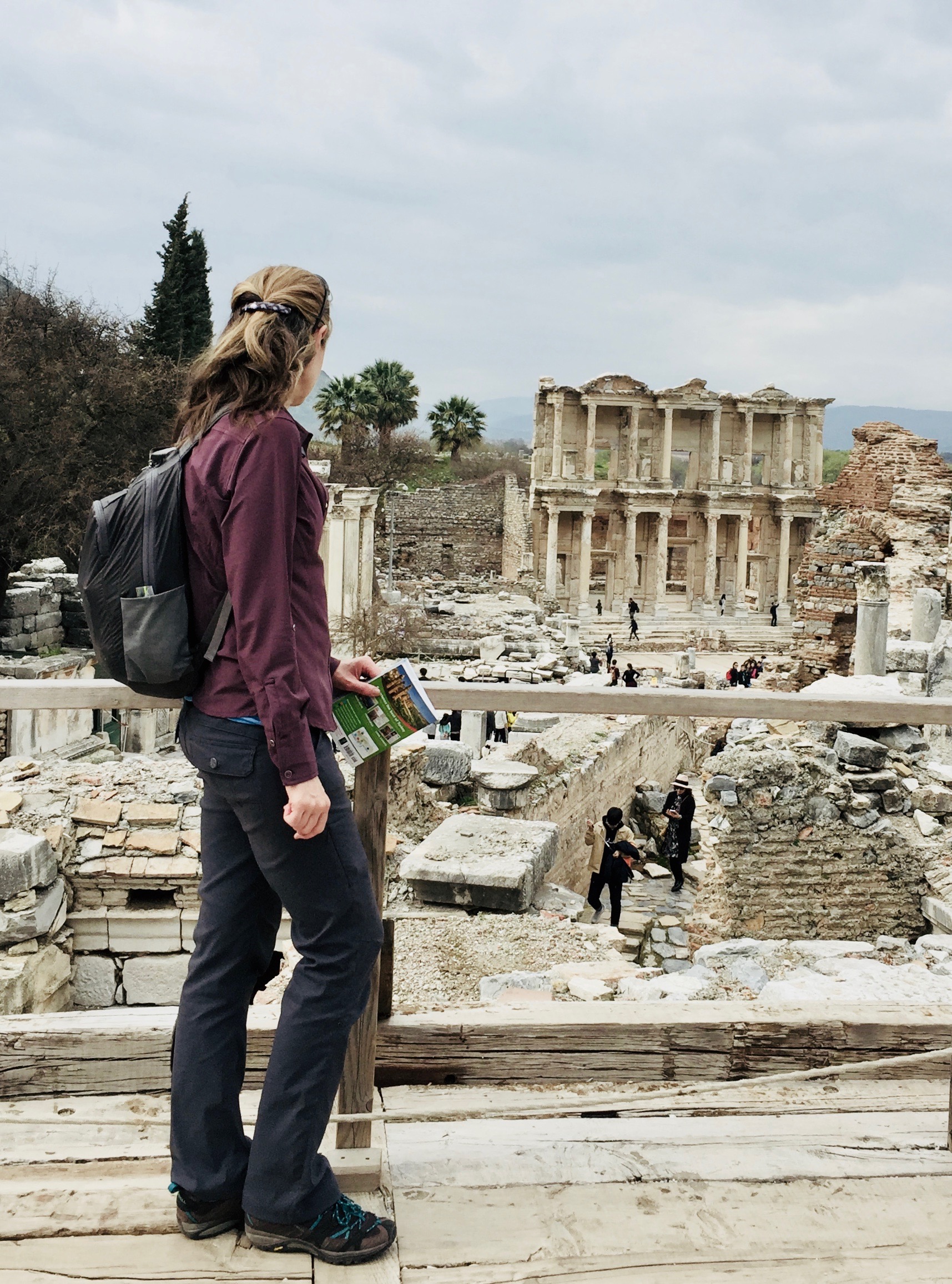
I am often asked, “How do you plan your trips?” The good new is that in this digital age, planning is much simpler than when (in medieval times) I first began travelling abroad. I have many vivid teen-aged memories of arriving in a foreign city, queuing at the train station tourist information booth to book accommodations, then racing down dark streets trying to find the hostel before it closed for the night. We slept many nights on the train station floor. Looking back, I cherish those adventures. (My travel guide was a book titled “Europe on $20 a Day” and we managed on even less. I ate a lot of bread and jam). But that was travel in a pre-cellphone era, and I am now grateful for the ability to book from the comfort of my phone. Here are my tips for planning a solo trip in an age of apps, plentiful travel videos, and translation tools…
- Buy a cellphone that you like and spend time learning what it can do. Comfort with your cellphone is a great start to booking and sustaining a trip. (P.S. I also use my cellphone as my camera and have spent some time familiarizing myself with the camera settings. This saves me from having to carry around a separate apparatus).
- Download and experiment with different travel apps. My favourites are Booking.com, Hostelworld, Rome2Rio, and Flightnetwork. Booking.com is actually my #1 favourite for finding accommodations due to several feature: it displays plenty of hotel/hostel options for each location, you can filter results to fit your needs, it is vey simple to change and cancel bookings, and my bookings automatically load into the calendar on my phone. Hostelworld is also a good option. True to its name, listings are mostly hostels, so fewer but more focussed results. The downside to this app is the difficulty in making changes to or cancelling bookings. I often use the Booking.com and Hostelworld apps in tandem – I find a hostel on Hostelworld, then look for it on Booking.com and book it there. Always choose the free cancellation option when booking accommodations. Rome2Rio is a delightful little app that allows you to type in two destinations anywhere on the planet and it will tell you the transportation options between them, number of times those planes/trains/buses/ferries leave each day, and approximate costs. Flightnetwork displays your best flight options all over the world and costs them in Canadian dollars. Perfect!
- Join an on-line travel forum. I use Lonely Planet’s Thorn Tree. You can login to the forum anytime to read comments and ask questions of other travellers and the in-country moderator. Lots of good advice about the nitty gritty details of any travel itinerary available here.
- Plan to use public transportation in the countries you visit. Buses and trains are affordable and relatively stress-free modes of travel. You don’t have to park them, worry about dents, or navigate freeways or shoulder-narrow one-way alleys in foreign countries. Instead, You just sit back, relax, and enjoy the scenery. Many countries/regions offer travel passes that you can purchase ahead and that cover train/bus/ferry transport. Explore these options before you go. (If you do plan to rent a car, explore whether that country requires an International Driver’s License. Some do and some don’t. Know before you go to avoid disappointment)
- Passport – All countries require that you have space in your passport for their stamp and that you have at least 6 months (or sometimes more) remaining before your passport expires. Before you book those tickets, check your passport.
- Visa – Many countries require that you have a visa to enter. The type of visa will change depending on your planned length of stay and the purpose of your trip. Some countries allow you to apply for and purchase this at the airport. Other countries require that you attain this ahead of travel. This is must-know information. If you do not have a required visa, the airline may not allow you on the flight. Every country now has a website where they outline the process for attaining an entrance visa. For example: Vietnam requires that all Canadian tourists have a visa. To obtain this visa, you must first apply and pay for a permission letter which is emailed to you. This permission letter must be shown at your port of entry into Vietnam where you then pay another fee and receive the visa stamp in your passport.
- Purchase comprehensive travel medical insurance. Do not leave home without this because your home country medical coverage will not cover your medical costs abroad. Having said that, for Canadians at least, your Canadian medical coverage card must be current in order for the travel medical insurance to be valid. Some travel rewards credit cards automatically cover you for limited (i.e. 3 weeks) of travel. Also if you are planning a very active, adventurous trip (i.e. including skydiving or scuba diving, etc), you must disclose this to the travel medical insurer. Many insurers will not cover these pursuits but there are companies, like World Nomads, who will.
- Vaccinations and Medications – start looking into this early as some vaccines are given as a series over weeks or months. Most major centres now have travel health clinics so book an appointment with a travel specialist. A good source of information is the U.S. Center for Disease Control (www.cdc.gov) website which lists current outbreaks and endemic risks and advises how best to protect yourself. And please, please, please consider taking Dukoral vaccine to prevent “Traveller’s diarrhea.” When I was growing up, gastrointestinal illness was just an expected nuisance while travelling. Thanks to Dukoral, it no longer has to be.
- Register on the travel.gc.ca website (look for Registration of Canadians Abroad). This government website supplies Canadians with up-to-date travel advisories on every country in the world. Registering your trip here informs the government about your presence in a given country and allows them to account for and contact you if there is ever an emergency there. In this beautiful world in which we live, ugly situations can arise. (I pay attention to the news and to travel advisories and removed two countries from my original itinerary for this trip due to political instability. There is always next time). From this site you can also print off wallet-sized cards containing contact info for the Canadian consulate/embassy and emergency services in that country.
- Plan an itinerary that is attainable. If your travel goal is to relax and renew, then racing everywhere to see everything accomplishes nothing. Decide the focus of your trip and the must-sees and leave the rest. I promise, you will enjoy the trip more. And please leave time to interact with and learn from the local people. I have found that people love to talk about their country and help you to see it through their eyes. My favourite memories of Turkey are of taking tea with a shop keeper (who also showed me the antiquities he had for illegal sale) and the scrumptious lunch we shared with our hotel owner and his family.
- Consider your fitness level. If you want to do a hiking trip abroad, train for this. Don’t just arrive and think that you can traverse that mountain trail without problems if you haven’t exercised in six months. This is a consideration whether you travel with a group or solo. And since a solo traveller has to rely on herself a lot this is a big consideration. So make travel your fitness goal. I have spent the past year and a half recovering from a severe leg crush injury. Intensive physiotherapy and effort have allowed me to fully recover for this trip, but eight months ago I could never have attempted it. Know your limits.
- One more little item before I sign off this post. I invite you to please always travel with humility and with a respect for the places you will visit and the people whom you will meet. I truly believe that whenever I travel I am an ambassador for Canada. Whatever I may believe about the politics or practices of a country, I am a visitor and must always find the energy for thoughtful and respectful attitudes. I do not travel expecting or wanting everything to be “like it is at home.” Please view travel as an opportunity to learn from other cultures and to examine your own culture from afar. The results may surprise you.
Happy travels everyone! Thank you for reading and stay tuned for my next post from the road!

 onedustybackpack